
HISTORY REVEALED
Lancashire and Cumbria are rich with culture, facts and history. Whilst visiting the area, don’t miss out on the chance to learn, wonder and immerse yourself in history. Here is a list of just some of the must see historic places and attractions.
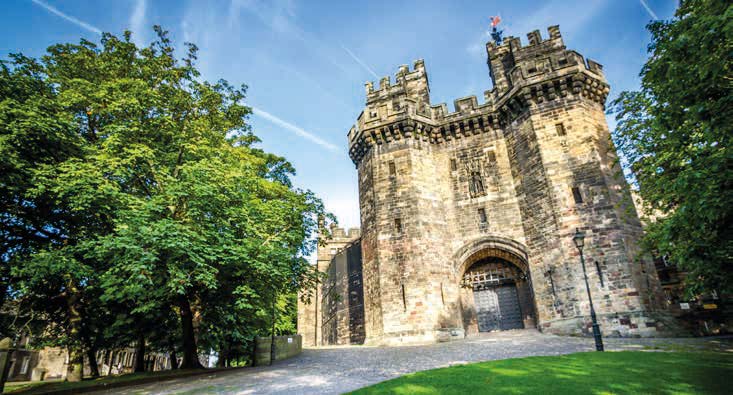
LANCASTER CASTLE
Lancaster Castle, often known as John O’Gaunt’s Castle, is one of the most historically fascinating surviving buildings in the country. Owned by the Duchy of Lancaster (His Majesty the King is the Duke of Lancaster) the castle has witnessed scenes of significant historical, cultural and political impact throughout the centuries.
Until 2011 it was a fully functioning HM Prison and today is a magnificent ‘living’ monument, offering a glimpse into England’s often dark past, through tours and special events enjoyed by modern day visitors of all ages.
CARNFORTH HERITAGE VISITOR CENTRE AT CARNFORTH STATION
Visitors come from all over the world to see ‘The Home of Brief Encounter’ where iconic scenes of David Lean’s classic film were filmed. There are a wide range of fascinating displays and Brief Encounter is shown on demand in the small cinema area. Major events this year included a 1940’s weekend celebrating Brief Encounter’s 80th anniversary. There is a small admission charge. www.carnforthheritage.co.uk
Note The Heritage Centre is closed from December 19th 2025 to March 1st 2026 for refurbishment
The adjacent Brief Encounter Refreshment Room Bistro & Bar has been faithfully restored to its 1940’s period glory and offers a superb range of home made food, a licensed bar and top quality beverages.
LEIGHTON HALL
The ancestral home of the world renowned Gillow furniture family, Leighton Hall is still lived in today and is not a stuffy museum – ‘there aren’t any roped off areas here’.
Share the magic of Leighton Hall’s colourful heritage and unique personality either at a regular day visit, or during one of the many special themed events throughout the season.
LANCASTER PRIORY AND PARISH CHURCH
Lancaster Priory and Parish Church is a Grade 1 listed building and dates from the 11th century, though there has been a church on the site from 630AD. Come and discover the Church’s history and witness the impressive medieval interior with Viking ornaments and much more.
LANCASTER MARITIME MUSEUM
Lancaster Maritime Museum occupies two historic buildings on St George’s Quay, the city’s main 18th century harbour. Discover
the story of Lancaster and Morecambe’s relationship with the ocean, the challenging lives of those living and working in the places between land and sea, and how our inland waterways have shaped our lives, work, and leisure. Uncover the dark legacy that the transatlantic slave trade has left in this proud,
historic city and show how the quay where the museum stands was once a bustling place of trade and commerce from all over the world. Open Mon, Fri, Sat & Sun afternoons.
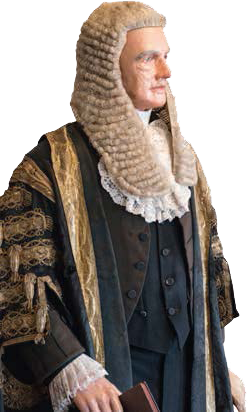
THE JUDGES’ LODGINGS
Nestling below Lancaster Castle, The Judges’ Lodgings dates back 400 years on a site that has been at the centre of Lancaster’s history for nearly 2000 years. The current house was built around 1625 by Thomas Covell, Keeper of Lancaster Castle and famous for imprisoning the Pendle Witches during the infamous Lancashire Witch Trials. From 1826 the house became a lodgings for the travelling ‘Red Judges’ of the Assizes Courts. Dressed in their scarlet robes, the Judges decided the fate of murderers, forgers and highwaymen at Lancaster Castle.Today the house is home to beautiful Georgian furniture by Gillows of Lancaster, elegant period rooms and the popular Museum of Childhood. Open seasonally from April to November.


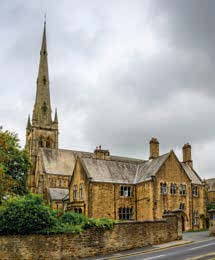

HOLKER HALL
A privately owned country
house close to the beautiful village of Cartmel.
Once described as ‘the grandest building of its date’, the house stands in an estate of 80 hectares, surrounded by formal gardens, parkland and woodland. There are many events and activities throughout the year, and the house, café and local produce shops are open to visitors.
LANCASTER CITY MUSEUM
The City Museum is housed in Lancaster’s former Town Hall, an elegant Georgian building constructed in 1781-83.The museum itself was founded in 1923 and its collections illustrate the history and archaeology of the city of Lancaster. It is also home to the King’s Own Royal Regiment Museum. Regularly changing exhibitions, events and activities for families .Open Mon, Tues, Fri, Sat & Sun
LANCASTER CATHEDRAL
Lancaster Cathedral, also known as St Peter’s Cathedral has celebrated over 150 years in existence, since it started as a mission church.
The current church was designed in the Gothic revival style and in 1901 a baptistery was added.
The Grade 2 listed cathedral is in active use, arranging services, concerts and other events, and is open to the public.
GRANGE-OVER-SANDS
Grange is first mentioned in the ancient Cartmel Priory registers of the 15th and 16th centuries, when it was recorded as ‘Grange with Kentisbank’. It is generally believed that the name derived from the old French ‘Graunge’ meaning a barn or granary where the monks of Cartmel Priory stored their grain.
LEVENS HALL
First built by the de Redman family, the house became the property of Colonel James Grahame in 1688, who brought in French gardener Guillaume Beaumont to plan a garden for Levens Hall. The house has since become one of the finest stately homes in Cumbria. Visit Levens to see beautiful architecture, stunning topiary gardens and
discover some of Cumbria’s history – you might even see a ghost!
LANCASTER
COTTAGE MUSEUM
The Cottage Museum (Open Saturday afternoons during the
summer season) is part of a 1739 house, subdivided in about
1820 and now furnished to evoke a humble yet comfortable
artisan’s house. The museum provides an intimate glimpse of
ordinary life in a tiny and intriguing 18th century cottage at the
heart of historic Lancaster, facing Lancaster Castle.
DALTON CASTLE
Dalton Castle is a Grade 1 listed 14th century peel tower situated in Dalton-in-Furness. It was constructed by the monks of Furness Abbey for the protection of the nearby market town and was the building from which the Abbot administered the area and dispensed justice.
FURNESS ABBEY
Furness Abbey is a former monastery located in the northern outskirts of Barrow-in-Furness. The Abbey dates back to 1123 and is built entirely out of local sandstone. The majority of the current ruins date from the 12th and 13th centuries. By the 15th century it had been completely remodelled and had become the second richest and most powerful – as well as one of the grandest Cistercian Abbeys in England. This year their Medieval Fair is on 31st August 2024.
JOHN BARROW MONUMENT
Known locally as The Hoad, the monument is a 100ft tower near Ulverston. It was erected in 1850 and commemorates Sir John Barrow, the founder member of the Royal Geographic Society.
While the monument was designed to resemble a lighthouse, it has never had a functional light!
It is a Grade 2 listed building and stands as one of the iconic symbols of North West England.